
talaiot de son fred
one of the MOST REPRESENTATIVE in the municipality
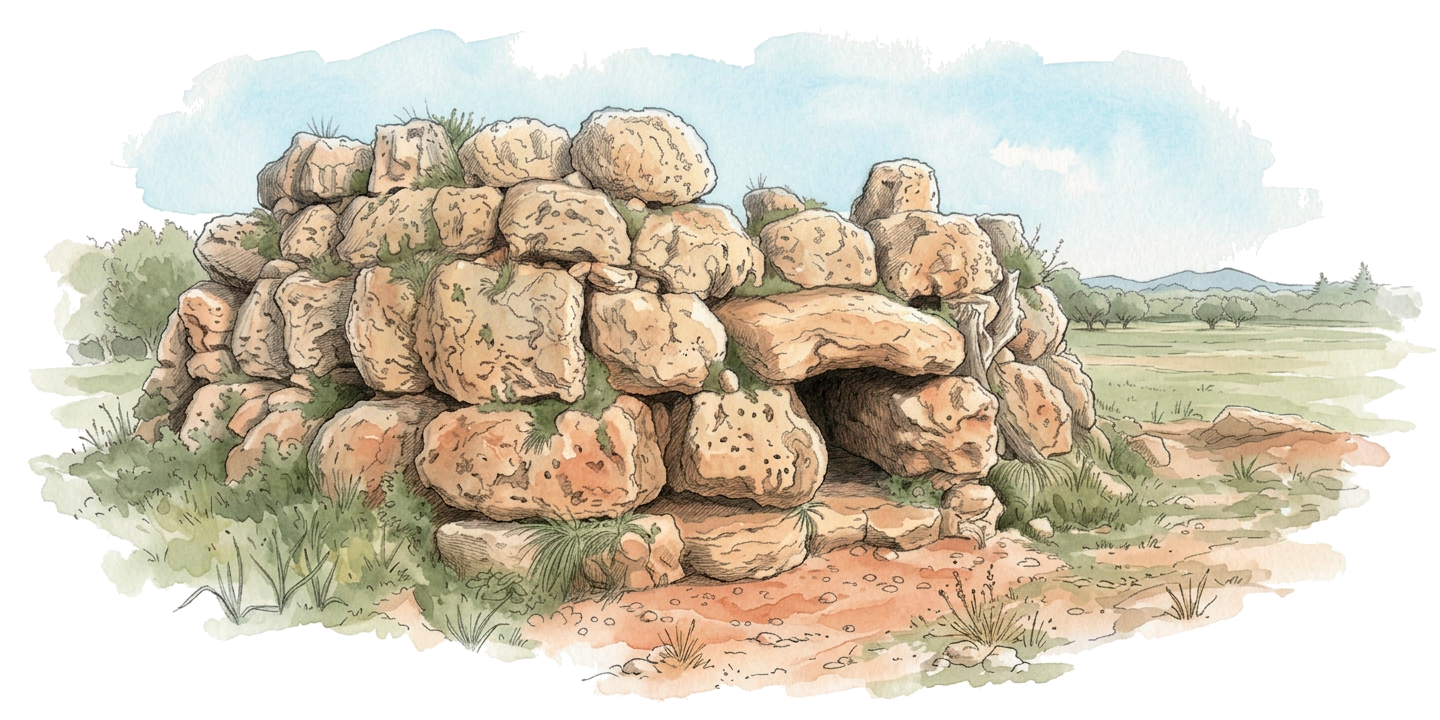




Discover one of the most representative talaiots in central Mallorca, circular in plan with a truncated-cone elevation, well preserved and built with large blocks of cyclopean stone. On this page you will find information on how to get there, what you will see and its history.

duration of the visit
15 min
What will you see?
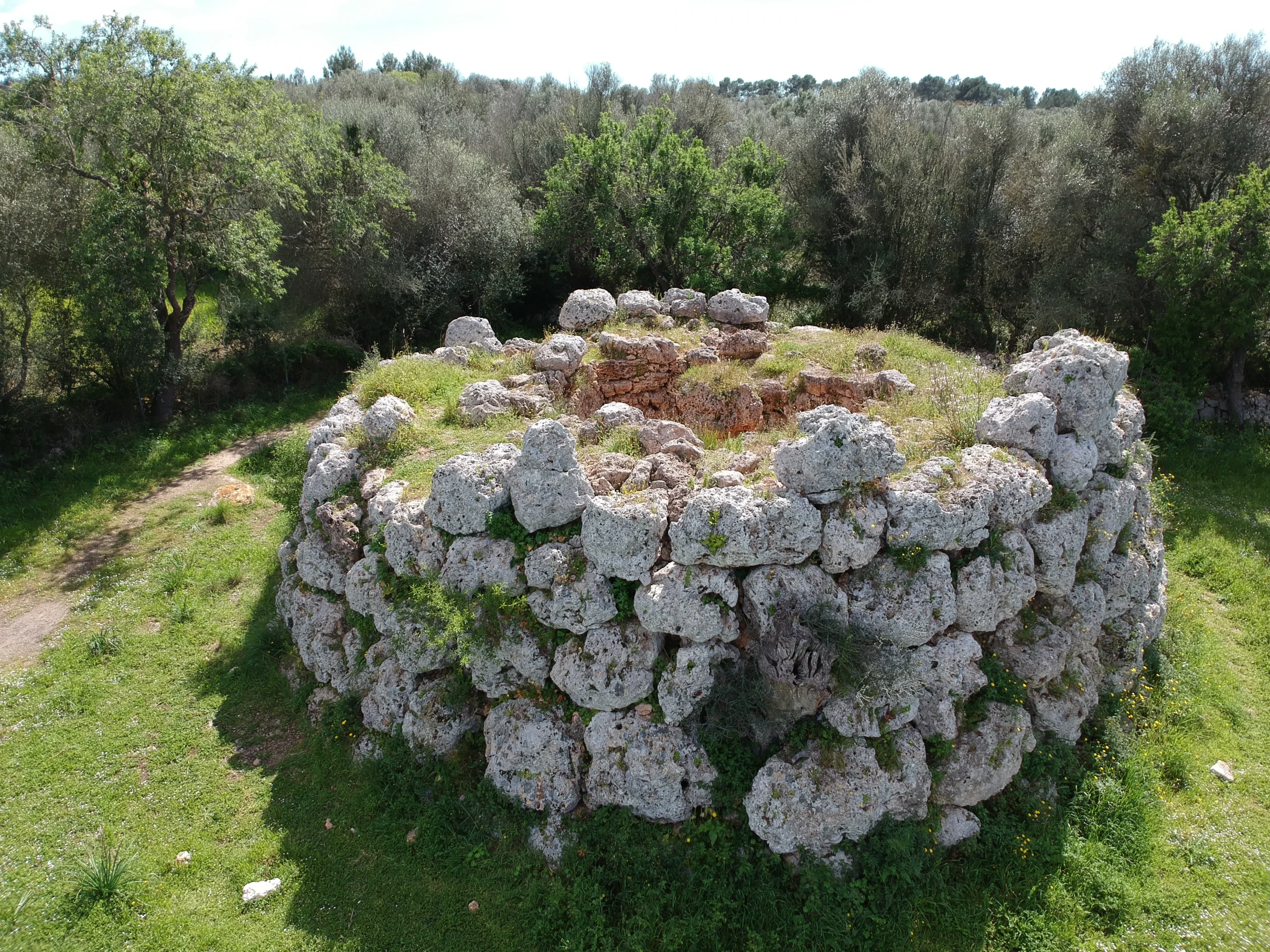
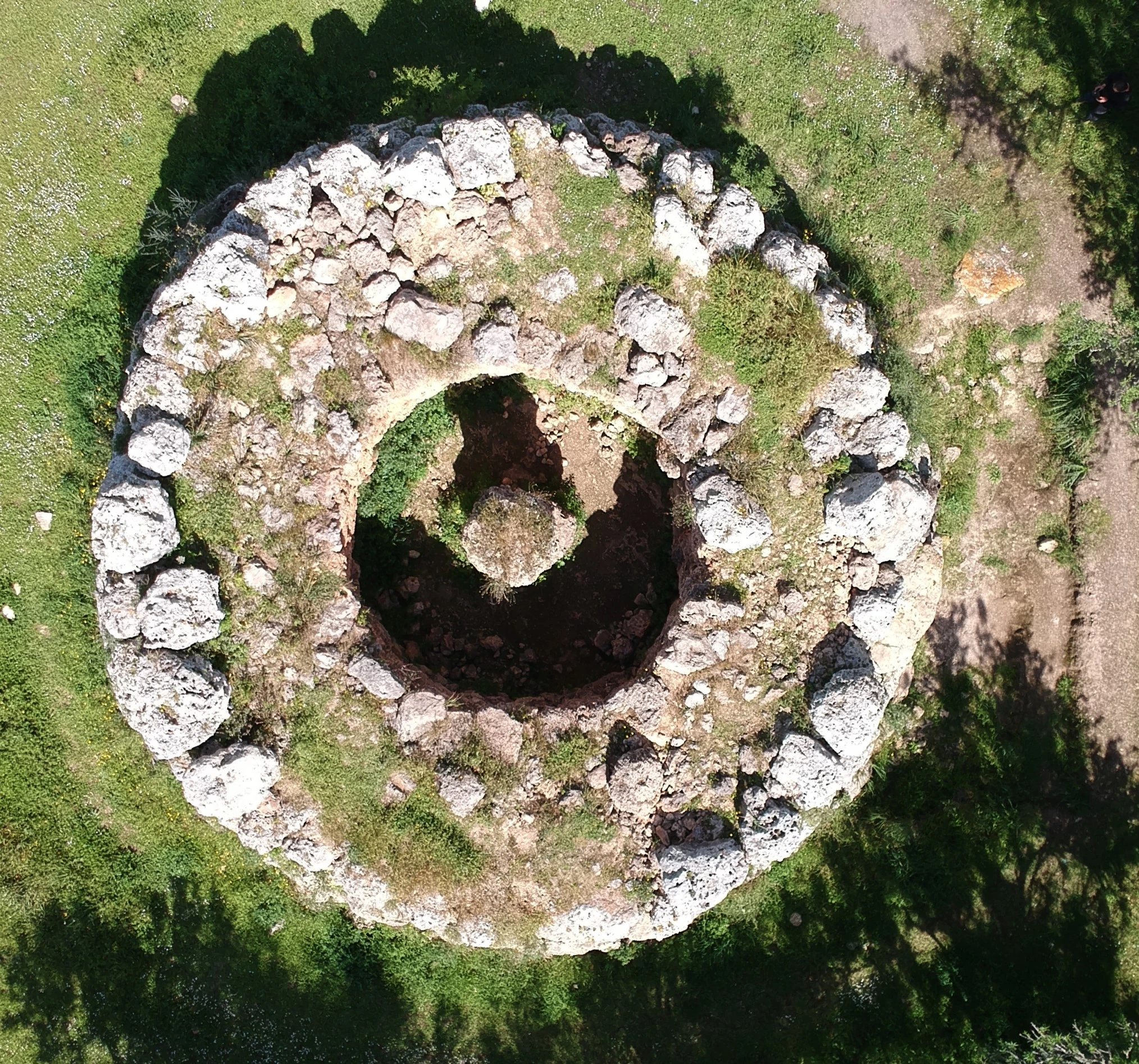
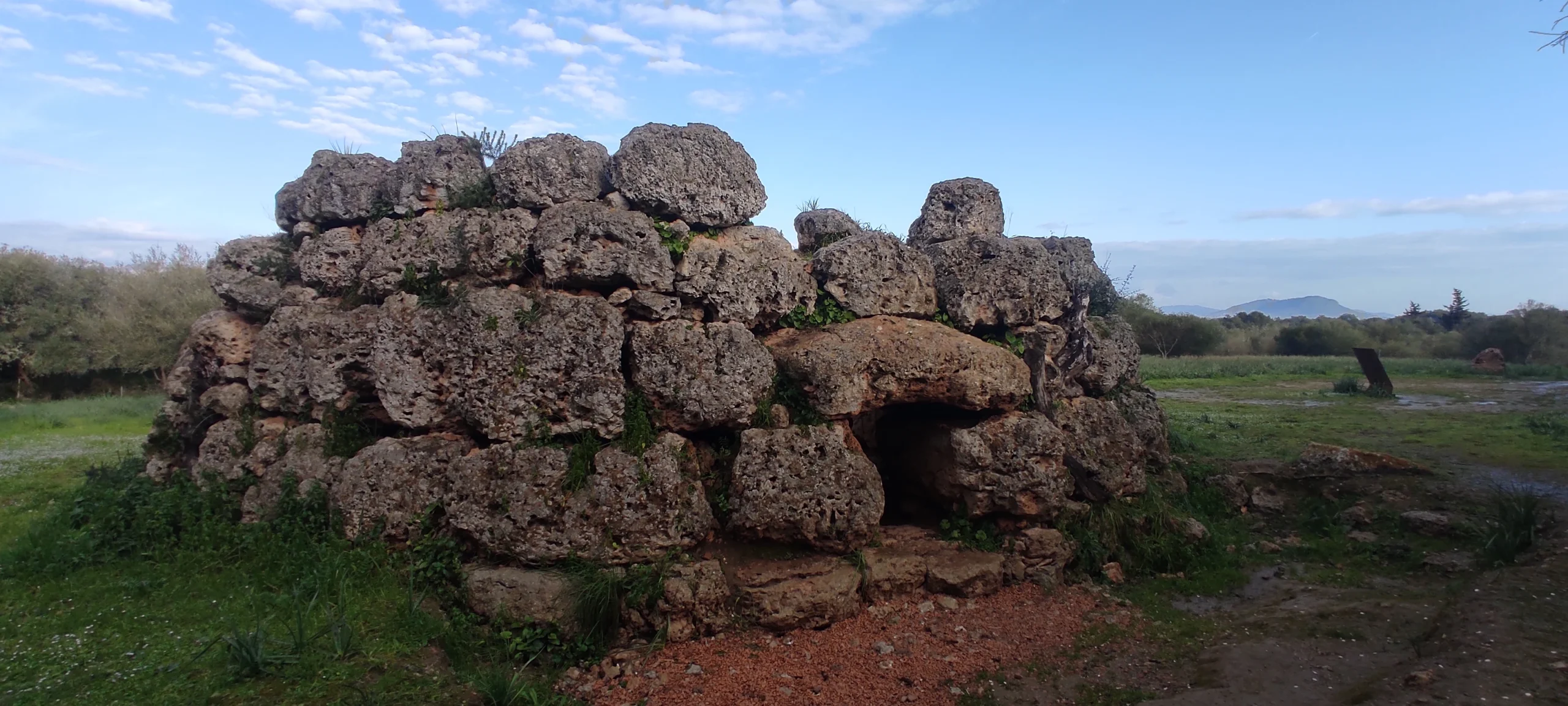
A talaiot circular in plan with a truncated-cone elevation, well preserved, built with large blocks of cyclopean stone laid without mortar. Its height and volume make it, both today and in the past, a landmark within the agricultural landscape of Sencelles.
Stepping inside its chamber is an experience not to be missed.
How to get there?
Municipally owned land, permanently open and easily accessible. You should park your vehicle by the track before crossing the gate in the fence where the talaiot stands. The ground is flat and suitable for all ages. Comfortable footwear is recommended, and please always respect the surroundings. For your safety and to preserve the talaiot, climbing onto it is not permitted.
From Sencelles take the Ma-3120 towards Inca. After about 850 m, turn right at a wide, signposted turning. Follow the paved track until you reach Camí de Son Fred, where a sign for the talaiot points you to the right. Continue along Camí de Son Fred and, after about 200 metres, you will find the site’s entrance signage on your right. Coming from Inca, turn off onto Camí de Son Fred on your left and follow the signs.
What else do we know about Son Fred?
Son Fred is one of the most representative talaiots in central Mallorca. For many decades it was one of the few signposted talaiots, partly thanks to the estate becoming public property back in the early 1980s.
It was excavated between 2006 and 2007 by archaeologists Javier Aramburu-Zabala and Damià Ramis, and restored by Margalida Munar and Bernat Burgaya.
Since 2014, the Sencelles-Costitx Archaeological Route team has been carrying out maintenance and outreach work on the archaeological heritage here.
A settlement, not an isolated talaiot
The archaeologist J. Aramburu-Zabala, in the monograph published in 2009, explains that the Son Fred talaiot was not alone: it formed part of a talaiotic settlement, together with a second talaiot and a perimeter wall, today split across private plots. In the surrounding area he documented a considerable presence of talaiotic pottery. Within a radius of around 2.5 km there are other important talaiotic sites such as Can Xim, Binifat and Son Company. This points to a fairly dense network of settlements that could hardly be explained without good relations between neighbours.
Its location, on a gentle rise with good views over the central plain, allowed the surrounding territory to be visually controlled and both livestock and agricultural resources to be managed.
Talaiotic Phase
(9th – 6th century BCE)
Construction and use of the talaiot as a communal and symbolic space, until a major fire caused the roof to collapse.
Balearic or Post-Talaiotic Phase
(4th–3rd centuries BCE)
A deceased individual was buried among the talaiot’s rubble; a dwelling attached to its façade would date from this same period.
Later use
(6th–7th centuries and the Islamic medieval period)
Ceramic remains found in the surrounding area indicate that the site was still visited centuries after the talaiot was abandoned.
9TH – 6TH CENTURY BCE
Talaiotic Phase
Son Fred was built in the 9th century BCE, beginning its use as a communal and symbolic space for the talaiotic settlement it was part of, together with a second talaiot and a perimeter wall now split across private plots.
The great fire
At some point in the 6th century BCE, a major fire caused the roof of the talaiot to collapse, marking the end of its original function — and, in fact, the end of the Talaiotic period in the Balearics.
4TH–3RD CENTURIES BCE
Balearic or Post-Talaiotic Phase
At some point in the 4th–3rd centuries BCE, in the midst of the Post-Talaiotic or Balearic period, a deceased individual was buried there among the talaiot’s rubble.
An attached dwelling
It appears that a dwelling attached to the talaiot’s façade would date from this same period, making use of the structure once it had already fallen out of use.
6TH–7TH CENTURIES AND THE ISLAMIC MEDIEVAL PERIOD
Later use
Based on ceramic remains collected in the surrounding area, we know the site would have been visited during the late Roman period (6th–7th centuries) and even during the Islamic medieval period, long after the talaiot was abandoned as a talaiotic space.
the materials found
Among the materials found on the talaiot’s floor, the discovery of more than a thousand cereal seeds such as wheat and barley, and to a lesser extent broad beans, stands out. Bones of domestic animals such as cattle, sheep, goats and pigs were also found, along with fragments of pottery pots and bowls.
All of this leads J. Aramburu-Zabala to conclude that this was a communal, not domestic, space where some kind of social event took place, one that may have involved consuming food that arrived already processed.
Space reserved for before-and-after restoration photos — to be added
Maintenance and outreach work on the site is ongoing.